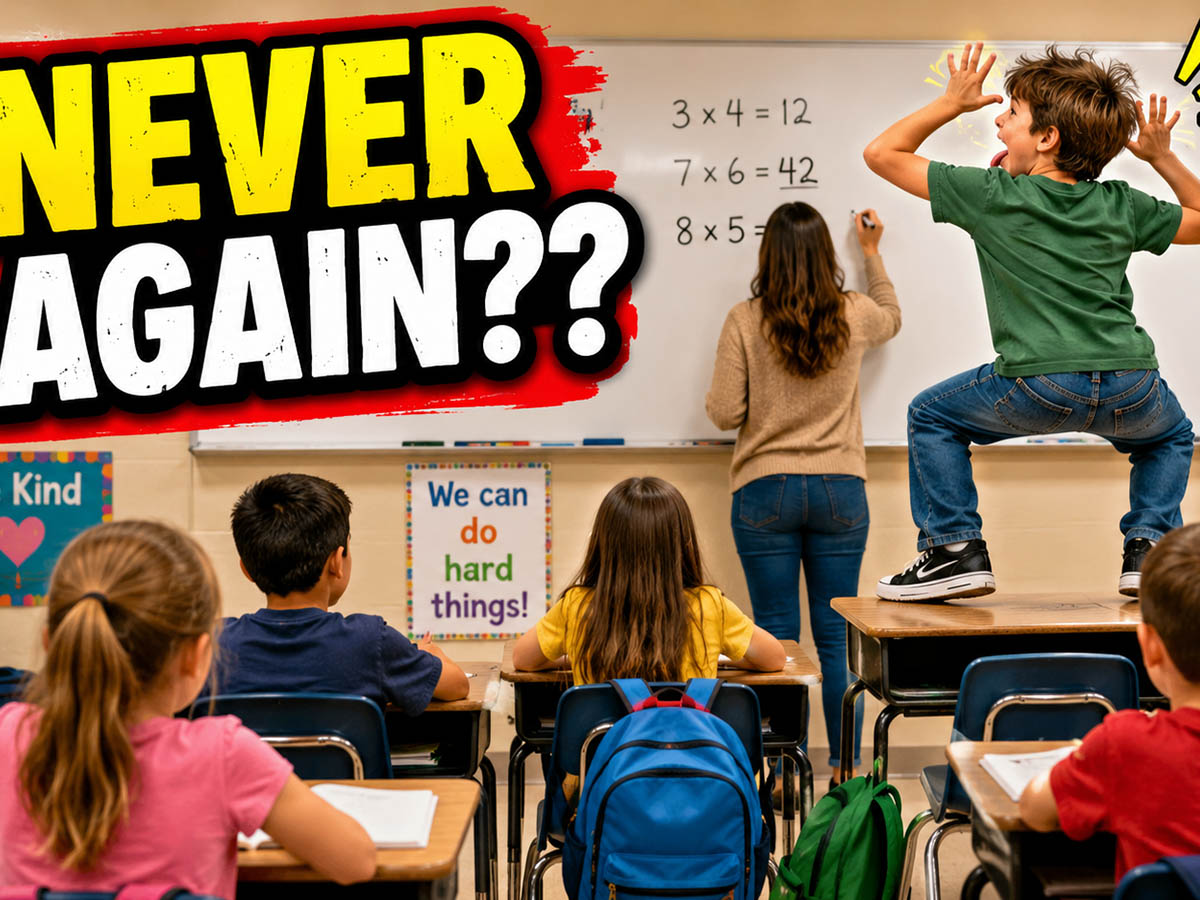
Published by COMPUCHILD
A child comes home from school, drops a backpack by the door, and announces, “My teacher says I need to behave better.” The parents may wonder what happened during the day, but an equally important question is: What experiences at home are helping this child understand care, responsibility, self-control, and accountability?
Better classroom behavior is not only about correcting what happens at school. It is also about helping children practice the habits that make positive behavior possible: listening, considering others, managing frustration, taking responsibility for mistakes, and following through on commitments. These habits begin developing long before a child enters a classroom and continue from pre-K through the middle school years.
Many educators and parents today recognize the value of social and emotional learning, positive behavior supports, and teaching children skills rather than simply punishing mistakes. This shift has important benefits. However, one limitation is easy to overlook: children cannot fully practice these skills at school if they rarely experience them in everyday life. Home, school, and after-school environments all contribute to the same developing child.
Consider a familiar moment. A seven-year-old accidentally knocks over a younger sibling’s carefully built block tower. The child immediately says, “I didn’t do it!” A parent could simply insist on an apology. But there is a richer opportunity: help the child acknowledge what happened, notice how the sibling feels, help rebuild the tower, and think about what could be done differently next time. That small interaction teaches far more than the words “say you’re sorry.”
Here are five ways parents and educators can help children develop care and accountability that they carry into the classroom.
1. Model the behavior you want children to learn
Albert Bandura’s social cognitive theory explains that children learn not only from direct instruction but also by observing the behavior of people around them. Children are constantly watching how adults handle frustration, mistakes, responsibilities, and other people.
That means “Do as I say” is rarely enough. Children also notice whether adults keep promises, admit mistakes, listen respectfully, and treat other people’s belongings with care.
For example, imagine a parent accidentally forgets to return a library book. Instead of quietly ignoring it, the parent might say, “I forgot to return this on time. That’s my responsibility, so I’m going to take care of it today.” The child sees accountability in action.
The same principle applies in the classroom. When educators calmly acknowledge their own mistakes, listen to students, and follow through on commitments, they give children a living example of responsible behavior.
2. Teach children to notice how their actions affect others
Martin L. Hoffman’s work on empathy and moral development explores how children’s growing ability to understand other people’s feelings can contribute to caring and prosocial behavior. The practical lesson for parents is simple: children need opportunities to connect their actions with their effects on other people.
Instead of stopping at “That’s not nice,” try asking questions that help children think beyond themselves.
“How do you think your sister felt when that happened?”
“What do you think your classmate needed from you?”
“What could you do to help make this right?”
Imagine a child interrupting another child repeatedly during a game. Rather than treating the behavior only as a rule violation, an adult can help the child recognize the experience of the other player: “When you kept interrupting, Maya didn’t get a chance to explain her idea. What could you do now?”
Care begins to become meaningful when children can see that their choices affect real people.
3. Give children practice with self-control, not just reminders about it
The Center on the Developing Child at Harvard University describes executive function and self-regulation as skills that help children focus, manage impulses, remember information, adjust to changing demands, and work toward goals. These abilities develop gradually through experience and practice.
This matters because a child who struggles to sit still, wait, shift activities, or recover from frustration may not simply need another reminder to “behave.” The child may need more opportunities to practice the underlying skill.
At home, that might look like playing a board game where everyone has to wait for a turn. It might mean asking a child to help prepare a simple meal while remembering several steps. For an older child, it could mean planning homework time before getting on a favorite device.
These ordinary experiences give children practice in pausing, remembering, planning, and following through.
When parents ask, “What is one thing you could try differently next time?,” they are helping children move from external control toward developing their own internal tools.
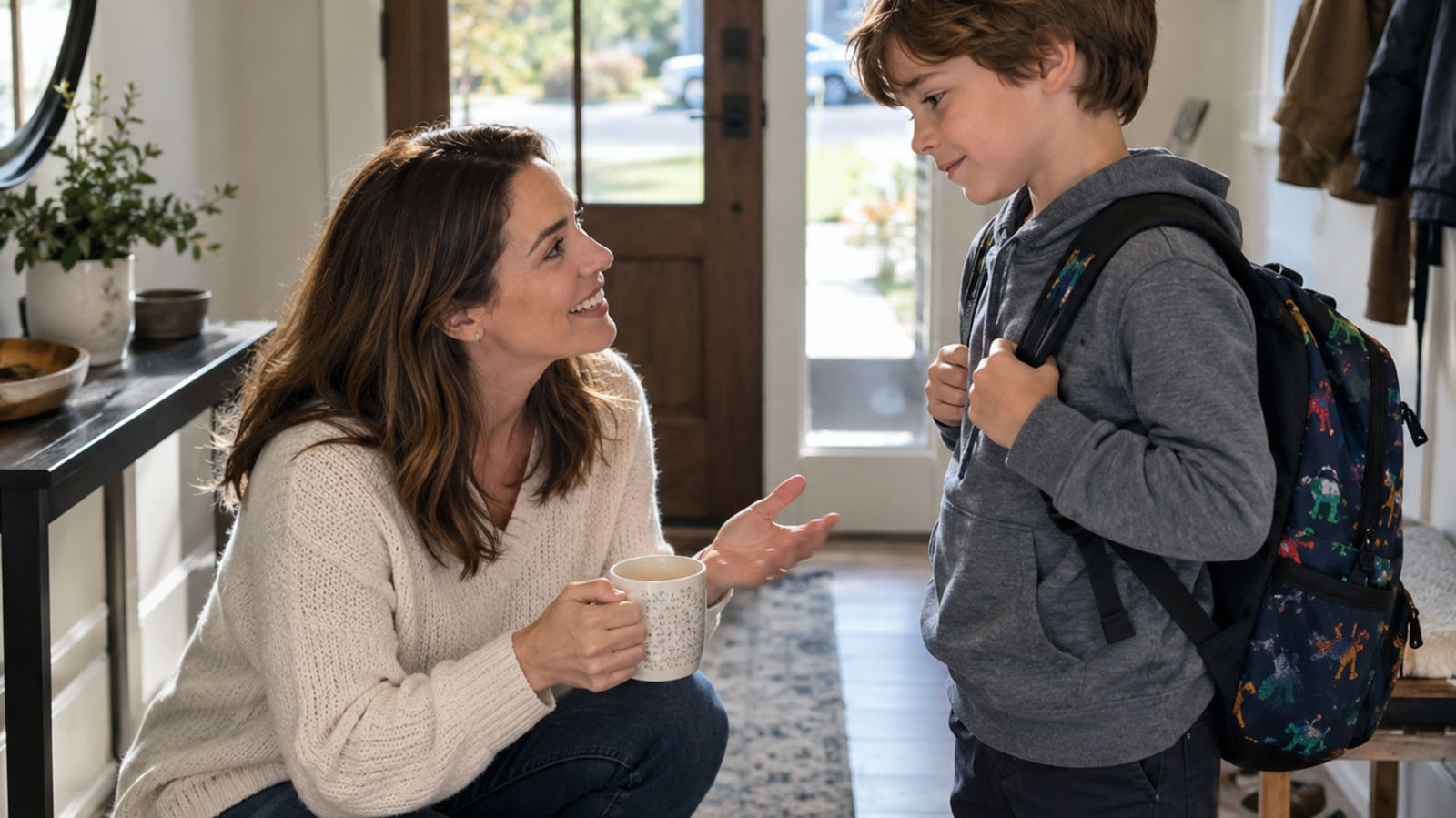
Talking to children about what happened at school encourages responsible behavior
4. Treat mistakes as opportunities to build responsibility
Carol Dweck’s work on mindsets brought attention to how beliefs about ability can influence how people respond to challenges and mistakes. One useful application for children is to make room for the idea that skills can develop through effort, strategies, feedback, and practice.
This does not mean excusing poor behavior. Accountability still matters. It means separating the child from the mistake.
A child who receives a poor grade might say, “I’m just bad at math.” A parent can respond, “This result tells us something about what you need to practice. Let’s figure out what was difficult.”
Similarly, if a student forgets classroom materials several times, the answer does not have to be either punishment or rescue. The adult can help the child create a system: checking the backpack before bedtime, using a checklist, or preparing materials the night before.
The message becomes: You are responsible for your choices, and you are capable of learning better ways to handle them.
That combination of accountability and possibility is powerful.
5. Let children learn through doing, not only through talking
Arthur Glenberg’s 1997 research on memory and action explored the relationship between memory, perception, and physical interaction with the world. His work contributes to a broader understanding of embodied learning: what children do and experience can become part of how they understand ideas.
For parents and educators, this is a useful reminder that a lecture about responsibility may not be as memorable as an experience that requires responsibility.
If a child wants to organize a neighborhood lemonade stand, for example, adults can use the opportunity to practice responsibility in a real context. The child can count supplies, make a plan, communicate with others, keep track of money, clean up afterward, and reflect on what worked.
If a group of students builds a robot and the design fails, they have an immediate reason to collaborate, listen, troubleshoot, share materials, and try again.
Children often understand responsibility more deeply when they have something meaningful to be responsible for.
These five ideas point to a larger truth: good behavior is not simply something adults demand from children. It is a collection of skills, habits, relationships, and values that children gradually learn to practice.
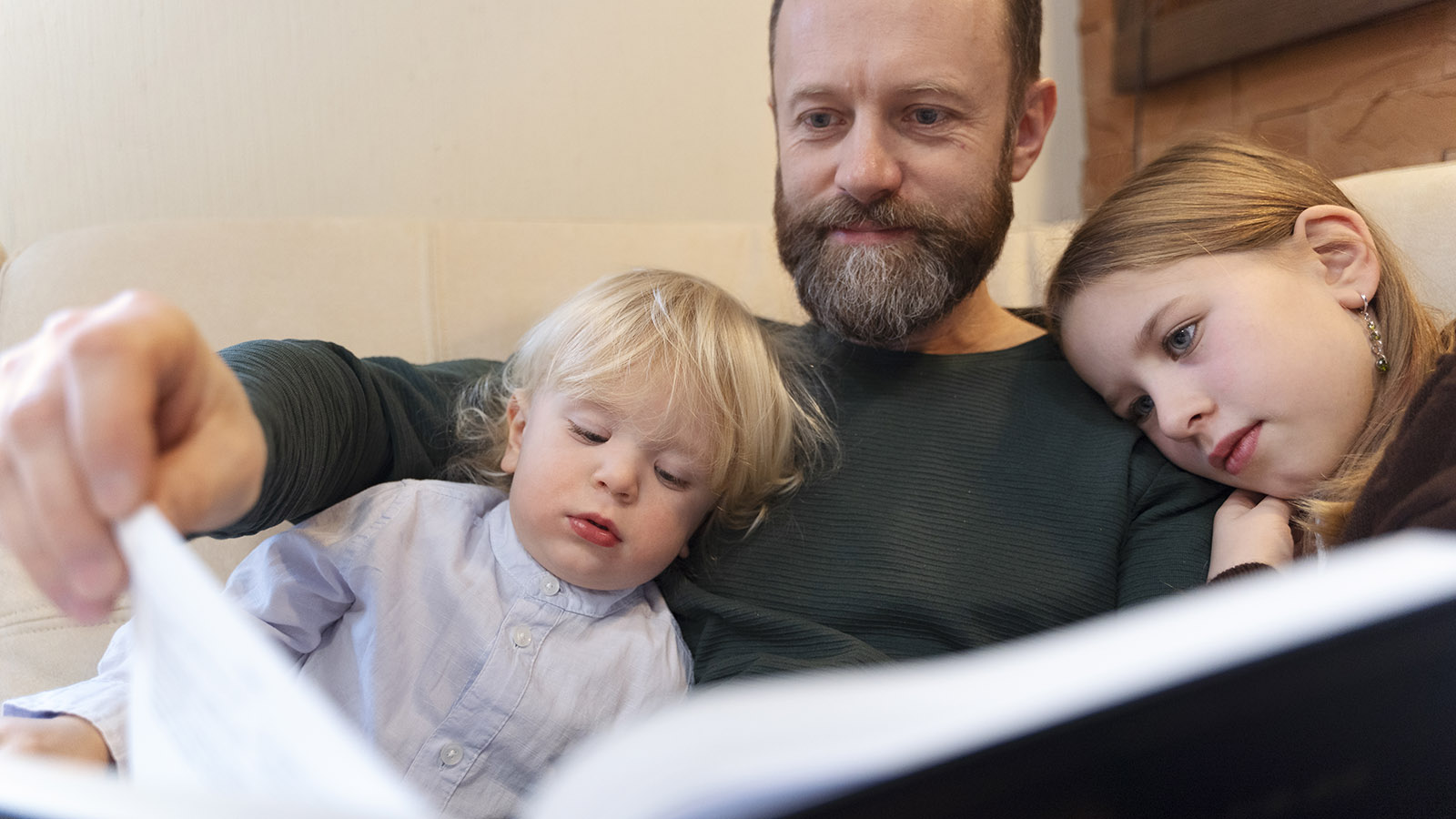
Children learn responsibility best by doing
What COMPUCHILD Has Observed
At COMPUCHILD, our experience since 1994 has centered on helping children learn through interactive, hands-on after-school enrichment classes in STEM, STEAM, technology, entrepreneurship, communication, and ethics. We have seen that children are often most engaged when learning gives them something meaningful to make, solve, test, explain, or improve. Our after-school education programs intentionally emphasize collaboration and cooperation alongside technical learning, because creating something with other people naturally creates opportunities to practice patience, communication, responsibility, and respect. COMPUCHILD’s philosophy is that children should not only acquire information; they should develop curiosity, confidence, creativity, and ethical awareness to use what they learn constructively.
Helping Children Grow Beyond the Classroom
The goal of teaching care and accountability is not to produce children who never make mistakes. Children will interrupt, forget, argue, become frustrated, make careless choices, and occasionally hurt someone’s feelings. That is part of growing up.
Our responsibility as adults is to help children learn what to do next.
A child who learns to repair a mistake at home becomes better prepared to repair a mistake with a classmate. A child who practices listening to family members becomes better prepared to listen during a group activity. A child who learns to take care of shared materials becomes more prepared to contribute responsibly to a classroom, team, or community.
At COMPUCHILD, we believe children’s development is strongest when academic learning and character development are not treated as separate worlds. Curiosity, problem-solving, communication, ethics, responsibility, and creativity can reinforce one another.
For parents wondering why kids lose interest in learning, the answer is not always that the material is too difficult or that children need more entertainment. Sometimes children need to feel that learning has a purpose, that their ideas matter, and that they have a meaningful role in what happens next.
That is why experiences matter. Whether a child is building a model, solving a problem, collaborating with a teammate, or figuring out how to improve a failed design, learning becomes more memorable when children can participate in it.
And sometimes, the most valuable lesson is not the final answer. It is learning how to care for the people around us, taking responsibility for our choices, and trying again.
That is where hands-on and experiential education can quietly make a difference: children get opportunities to practice the very behaviors we hope they will carry into classrooms, friendships, and life.
References
Bandura, Albert. Social Foundations of Thought and Action: A Social Cognitive Theory. Prentice-Hall, 1986.
Dweck, Carol S. Mindset: The New Psychology of Success. Random House, 2006.
Glenberg, Arthur M. “What Memory Is For.” Behavioral and Brain Sciences, vol. 20, no. 1, 1997, pp. 1–19. Cambridge University Press.
Hoffman, Martin L. Empathy and Moral Development: Implications for Caring and Justice. Cambridge University Press, 2000.
Center on the Developing Child at Harvard University. Enhancing and Practicing Executive Function Skills with Children from Infancy to Adolescence. Harvard University, 2014.
We recently explored this idea in a short video. Watch the video here.