A child sits alone with a screen. They type a question into an AI tool. Within seconds, they get a clear, correct answer. No waiting. No confusion. No embarrassment.
From the outside, it looks like learning is happening. And in many ways, it is. AI can explain concepts instantly, adjust difficulty, and give children access to information in ways we have never seen before. It’s one of the most powerful tools ever introduced into education.
But here’s the real question.
If a child learns primarily through AI instead of a human, what are they missing?
To explore that, we asked AI directly:
“Tell me if there are any reasons why AI cannot teach children?”
Its answer was surprisingly direct.
Children need human connection.
They need structure and judgment.
And learning is physical, social, and value-driven in ways AI cannot replace.
You can see this play out in real life.
So what exactly breaks down when learning is only AI-driven?
Here are five ways children learn that go beyond what AI can provide:
1. Learning depends on human connection, not just correct answers
Psychologist John Bowlby’s work shows that children learn better when they feel emotionally connected and secure. A child working with a teacher who notices frustration and adjusts in real time experiences learning differently than a child interacting with a screen. This is one reason learning for kids becomes far more engaging in human-guided environments.
2. Children need guidance to learn how to learn
Cognitive scientist Daniel Willingham explains that thinking is hard, and children often avoid it unless guided carefully. AI works best when a learner already knows how to focus and ask good questions. But most children are still developing those skills. Without guidance, they may rely on answers instead of building thinking habits.
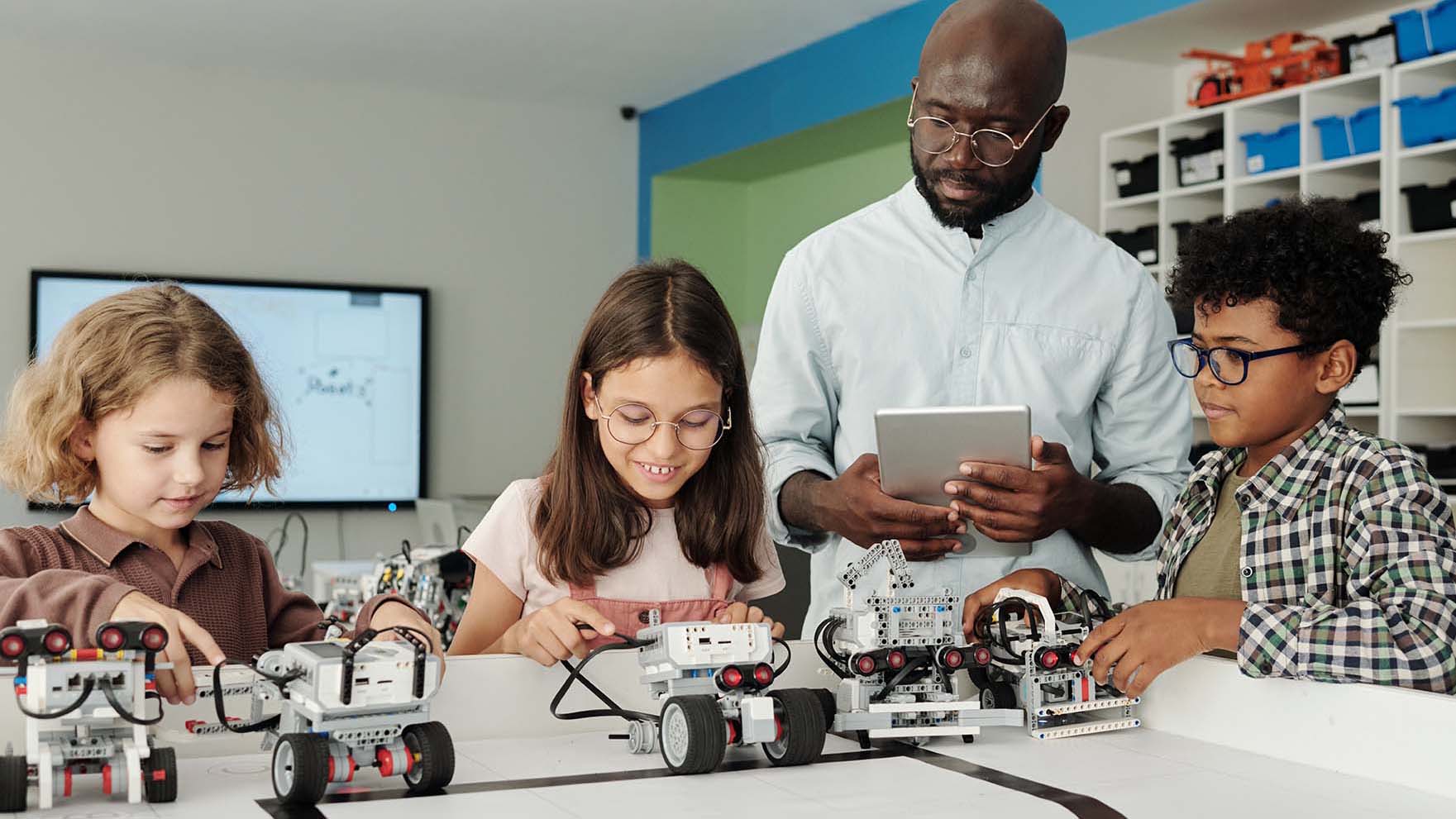
Instructor-led Hands-on Classes
3. Emotion shapes whether learning sticks
Research in educational neuroscience shows that emotion is deeply tied to attention and memory. A child who feels encouraged after solving something difficult is more likely to stay engaged. AI can give feedback, but it does not create the same emotional experience that drives long-term learning.
4. Real understanding comes from physical experience
Studies in embodied cognition suggest that learning is grounded in physical interaction with the world. A child can read about how something works, but when they build it, test it, and see it fail or succeed, the concept becomes real. This is why hands-on STEM and STEAM programs for kids create a deeper understanding than passive learning.
5. Children learn values and behavior by observing people
Psychologist Albert Bandura demonstrated that children learn by watching others and imitating behavior. How to handle mistakes, how to collaborate, how to persist. These are not learned through explanations. They are learned through experience with other humans.
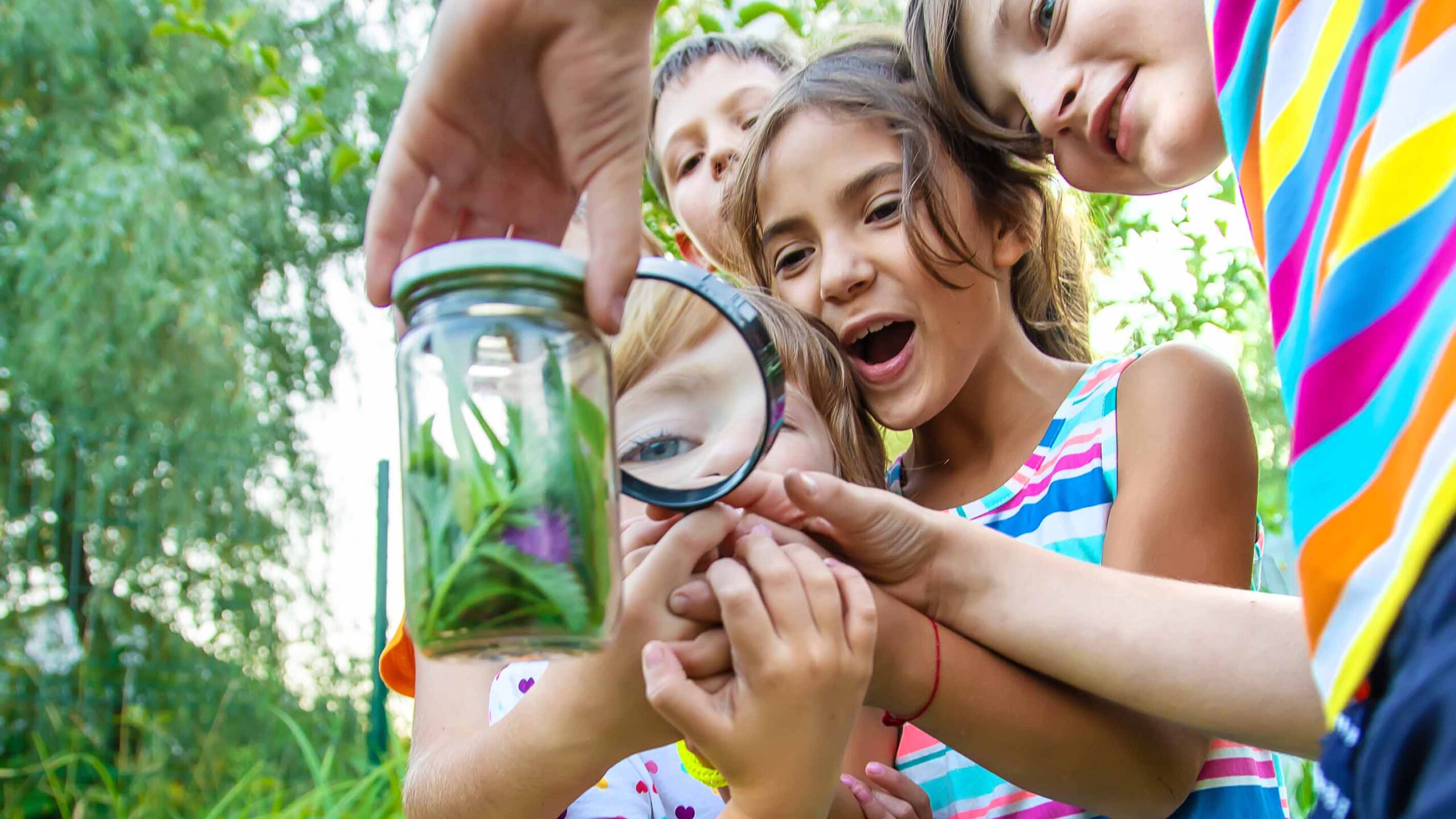 Children learn through observation
All of this connects back to what AI itself admitted. AI can deliver information. But it cannot replace connection. It cannot build judgment. And it cannot recreate the full experience of learning. This is why many children who rely heavily on AI may appear to understand concepts but struggle to apply them, stay motivated, or think independently.
When people ask, “Why do kids lose interest in learning?” the issue is often not the availability of answers. It is the absence of meaningful engagement. In the long run, education is not just about speed or efficiency. It is about helping children develop curiosity, resilience, and the ability to navigate real situations.
AI will absolutely become a part of how children learn. But it works best as a tool within a richer environment, not as a replacement for it. That’s where instructor-led, hands-on, collaborative after-school enrichment programs can help kids interact, build, question, and grow with others.
Because learning is not just something children access.
It is something they experience.
References
Bandura, Albert. Social Learning Theory. Prentice Hall, 1977.
Bowlby, John. Attachment and Loss. Vol. 1, Attachment. Basic Books, 1969.
Willingham, Daniel T. Why Don’t Students Like School? A Cognitive Scientist Answers Questions About How the Mind Works and What It Means for the Classroom. Jossey-Bass, 2009.