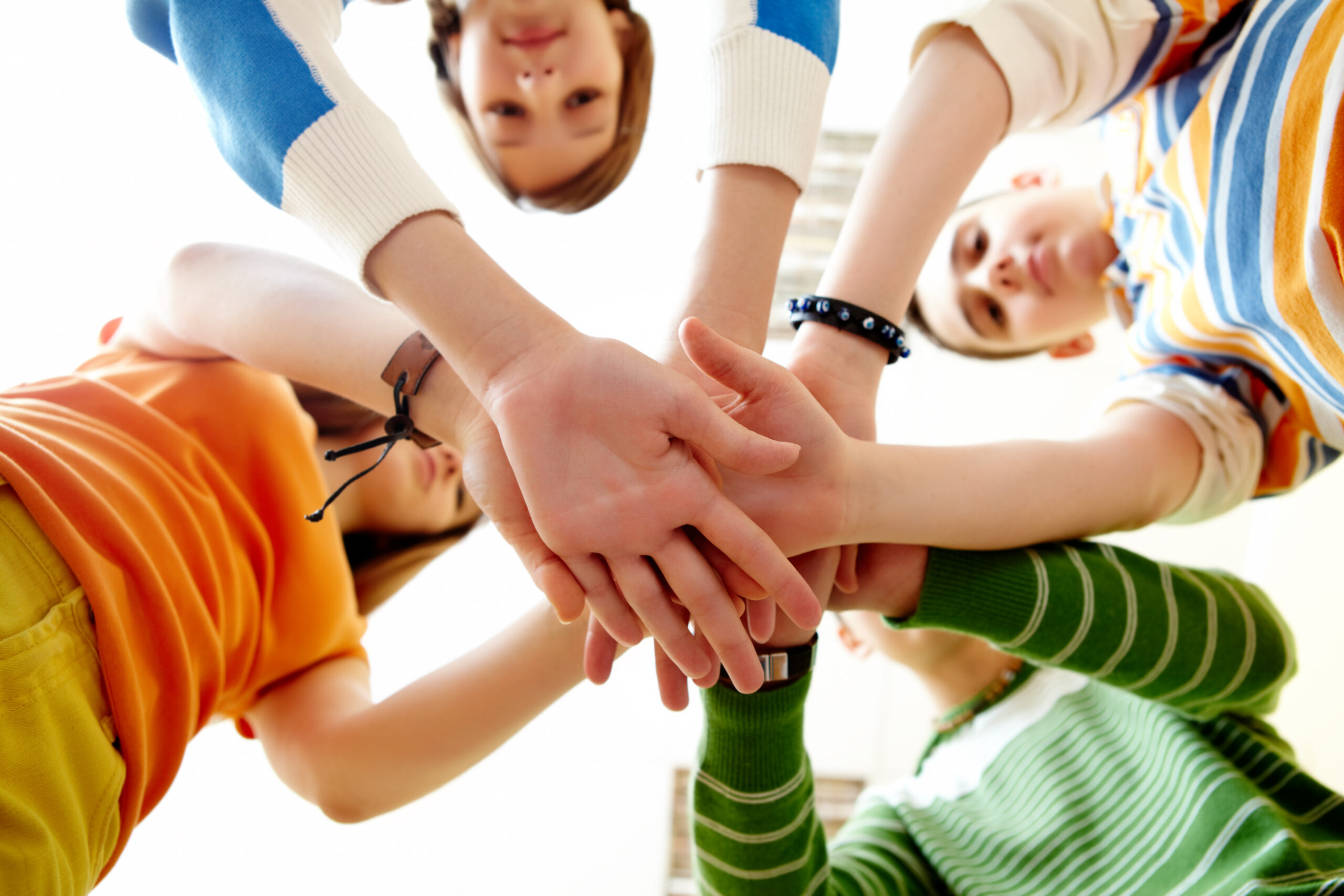
Published by COMPUCHILD
Have you ever watched your child struggle to share a favorite toy, insist on doing a school project alone, or become frustrated when another child doesn’t follow their idea during playtime? These everyday moments are more than typical childhood experiences. They are opportunities to teach one of the most important life skills a child can develop: teamwork.
Teamwork is the ability to work with others toward a shared goal, listen to different perspectives, communicate respectfully, and understand that everyone has something valuable to contribute. Teaching children the value of teamwork from an early age helps build social confidence, emotional intelligence, problem-solving abilities, and a stronger foundation for lifelong learning.
But how do parents and educators introduce this skill in ways that children genuinely understand and enjoy?
Why Teamwork Matters in School
As children move into elementary and middle school, their learning experiences become increasingly complex. They begin working on group assignments, exploring scientific concepts, participating in creative projects, and tackling challenges that require more than individual effort. At this stage, learning how to collaborate becomes just as important as learning academic concepts.
Today’s children have more opportunities than ever to explore their interests independently. From educational apps and interactive games to personalized learning platforms, technology has made learning more accessible, engaging, and exciting. These developments offer tremendous benefits, encouraging curiosity, independent thinking, and the freedom to learn at an individual pace.
However, independent learning has its limitations. Children also need opportunities to exchange ideas, communicate their thoughts, divide responsibilities, resolve disagreements, and recognize the strengths of others. These skills become particularly important as students progress through school, where collaboration increasingly plays a role in academic projects and real-world problem-solving.
Consider a group of middle-school students working on a robotics challenge. One student enjoys designing the structure, another is comfortable with programming, while a third is good at identifying problems and testing solutions. Initially, everyone may want to take charge of their own ideas. But as they begin listening to one another, sharing responsibilities, and combining their strengths, they discover that their project becomes more successful through collaboration.
The real achievement isn’t simply the robot they build. It is the communication, creative thinking, patience, and shared problem-solving that make the outcome possible.
This is why teamwork deserves an important place in elementary and middle school education. Children at these stages are ready to take on more challenging collaborative experiences that help them develop the confidence, interpersonal skills, and cooperative mindset they will need throughout their academic journeys and beyond.
1. Lead by Example: Show Children What Teamwork Looks Like
Children learn a great deal by observing the people around them. They notice how adults communicate, handle disagreements, share responsibilities, and respond when things don’t go according to plan.
Psychologist Albert Bandura’s Social Learning Theory, introduced in 1977, explains how children learn behaviors by observing and imitating others. They often learn what cooperation looks like by watching the adults they trust.
For parents and educators, this means teamwork should be visible in everyday life.
Instead of simply telling children to share, demonstrate sharing. Instead of asking them to listen, show them what attentive listening looks like.
A simple example:
Imagine preparing dinner at home. Rather than doing everything yourself, invite your child to participate. One person washes the vegetables, another arranges the ingredients, and someone else helps set the table.
As you work together, explain how everyone’s contribution makes the task easier.
You can also demonstrate healthy disagreement. If your child suggests a different way to complete a task, listen to the suggestion and discuss it respectfully.
These small experiences teach children that teamwork is not about one person being in charge, but rather respecting one another and working toward something together.
2. Make Cooperative Play Part of Everyday Learning
For young children, play is one of the most natural ways to understand relationships and cooperation.
Developmental psychologist Mildred Parten’s research on social participation among preschool children, published in 1932, explored how children’s play develops from individual activities toward more interactive forms of participation.
Her work highlights an important idea: social participation develops gradually. Children need opportunities to observe, interact, share, and eventually participate in activities with a common purpose.
Parents and teachers can encourage this development through simple cooperative games.
A simple example:
Instead of giving each child a separate model kit, invite two or three children to build a robot forklift together.
One child can design the wheel assembly, another can construct the lift portion, and another can create the chassis or program the robot.
For younger children, activities such as completing a puzzle together, building a tower, playing pretend restaurant, or creating a group drawing can introduce cooperation without making it feel like a lesson.
For older children, team challenges, board games, and collaborative creative projects can offer more opportunities to practice decision-making and shared responsibility.
The important thing is to choose activities where children need one another’s contributions to achieve a common goal.
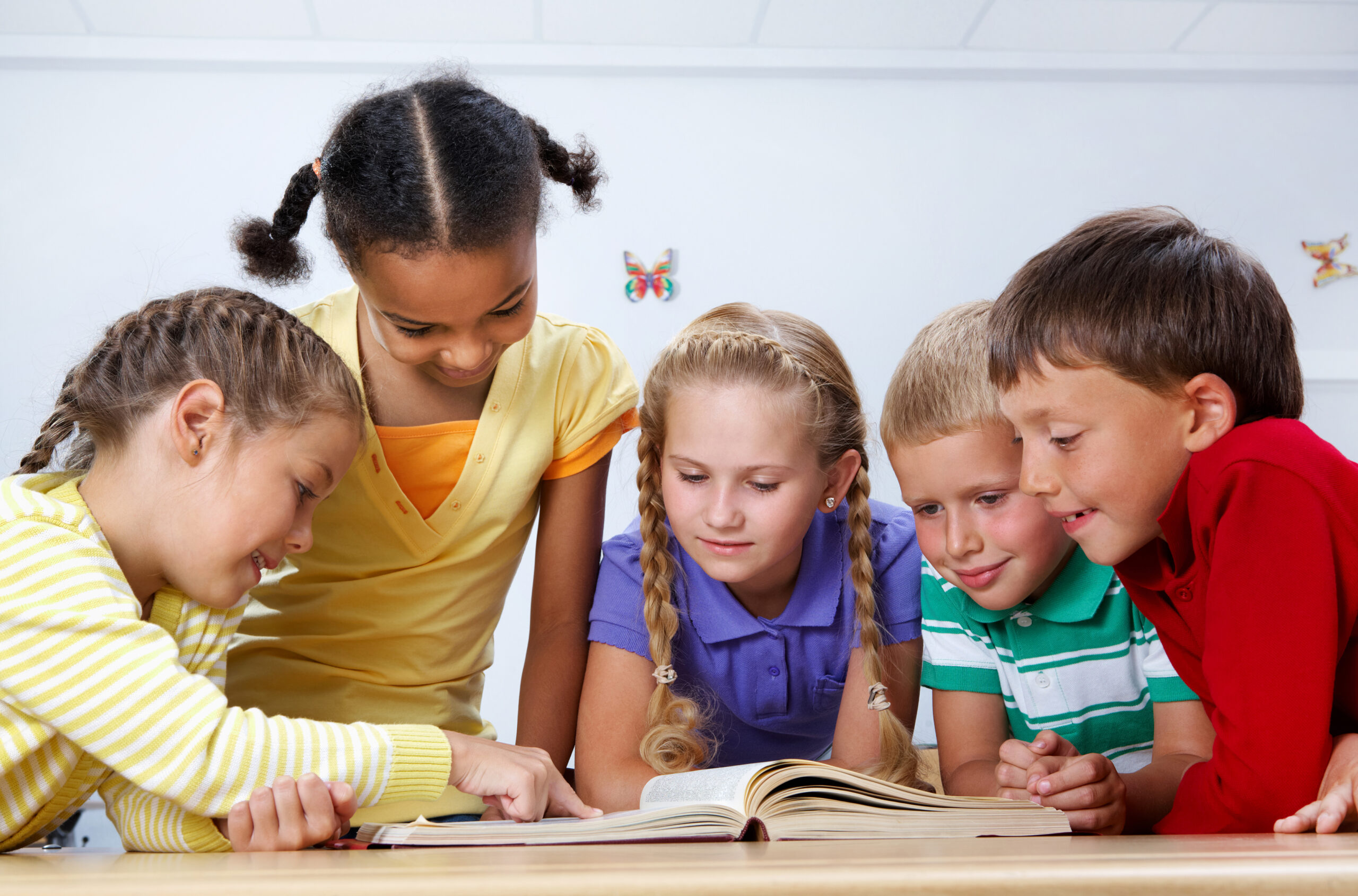
Giving each child a meaningful role can help encourage cooperation.
3. Encourage Children to Solve Problems Together
Children naturally have different ideas, preferences, and approaches to solving problems. Sometimes these differences lead to disagreements. Rather than immediately stepping in and deciding who is right, parents and educators can use these moments to teach children how to work through challenges together.
Psychologist Lev Vygotsky’s sociocultural theory, explored in Mind in Society (1978), emphasizes the important role social interaction plays in children’s learning and development.
His work suggests that children can develop new skills through interactions with people who support and guide their learning. This support can come from solving problems alongside others.
A simple example:
Suppose two children are working on a science activity and disagree about how to make a paper airplane fly farther.
One believes a wider design will work better, while the other prefers a narrower shape.
Instead of choosing one idea for them, ask questions such as:
- What happens if we try both designs?
- How can we test which airplane flies farther?
- What did we learn from the first attempt?
This encourages children to see disagreements as opportunities to explore ideas rather than reasons to stop working together.
It also helps them understand that different opinions can contribute to better solutions.
For parents, one useful habit is to ask, “How could you solve this together?” before offering an immediate answer.
4. Give Every Child a Meaningful Role
One of the most important lessons about teamwork is understanding that every contribution matters.
Children sometimes assume that the person who completes the most work, makes the biggest decisions, or gets the most attention is the most important member of a team.
Educators can challenge this assumption by giving every child a meaningful responsibility.
Educational researchers David W. Johnson and Roger T. Johnson have extensively studied cooperative learning and social interdependence theory. Their research explains how positive interdependence encourages individuals to recognize that their success is connected to the contributions of others.
When they understand that everyone has an important role to play, children work effectively on a team.
A simple example:
Imagine a group of elementary school students preparing a presentation about the environment.
Rather than allowing one child to complete the entire project, assign different responsibilities:
- One child researches interesting environmental facts.
- Another creates illustrations and visuals.
- A third organizes the information.
- Another presents the group’s findings.
Each child has something meaningful to contribute, and the final presentation reflects their combined efforts.
This approach is particularly valuable in STEAM programs for kids, where children can bring different strengths to the same challenge.
Some may enjoy designing, others may prefer experimenting, and some may be natural communicators.
The goal is not to make every child equally good at everything. It is to help them recognize the value of different abilities.
5. Teach Children to Celebrate Shared Success, Not Just Individual Achievement
Children are often encouraged to focus on individual accomplishments: completing assignments, earning good grades, winning competitions, or finishing tasks first.
While personal achievements are important, children also need to understand the satisfaction of accomplishing something together.
Educational philosopher John Dewey’s work on experiential education emphasizes the connection between meaningful experiences, reflection, and learning.
His ideas remind us that children benefit when they actively participate in experiences and think about what those experiences have taught them.
This principle can be applied directly to teamwork.
A simple example:
Suppose a group of children has just completed a challenging coding activity. Rather than celebrating only the child who wrote the most lines of code or resolved the final pesky error, encourage everyone to reflect on the process.
Ask questions such as:
- What did each person contribute?
- What was the most challenging part?
- How did someone else’s idea help the group?
- What would we do differently next time?
These conversations help children recognize that success often comes from combined effort.
Parents can practice the same approach at home. When siblings clean their room together, prepare a meal, or complete a family activity, celebrate the cooperation rather than focusing only on who finished first.
Over time, children begin to appreciate the satisfaction of achieving something as a team.
Celebrating shared success can help children appreciate the value of teamwork.
Small Lessons in Teamwork Create Lasting Life Skills
Teaching teamwork is not about expecting children to agree with everyone, avoid disagreements, or always put others first.
It is about helping them develop the confidence to express their ideas while remaining open to other perspectives. It is about understanding that leadership involves listening, that mistakes are opportunities to learn, and that individual strengths become even more valuable when shared.
Most importantly, children need repeated opportunities to practice these behaviors in real situations.
How COMPUCHILD Encourages Teamwork Through Hands-On Learning
At COMPUCHILD, teamwork is not simply something we talk about; it is something students practice in our classes. We typically organize students into groups of around 3 children that complete Entrepreneurial STEM™ projects together as teams. Working in these groups gives students opportunities to exchange ideas, share responsibilities, and learn from one another while tackling engaging challenges.
For example, during a coding activity, one student might suggest an idea for a program, another might work on writing the code, while a third helps identify errors and test different solutions. In robotics activities, students can work together to design, build, and troubleshoot their creations, learning that everyone’s contribution matters to the final result.
Through these activities, we see how children gradually become more comfortable sharing ideas, taking responsibility, and working toward a common goal. Some students naturally take the lead, while others contribute through creativity, technical skills, or thoughtful problem-solving. Our goal is to give every child an opportunity to participate meaningfully and recognize that successful teamwork happens when everyone contributes.
Growing Together: Preparing Children for a Collaborative Future
The value of teamwork extends far beyond childhood classrooms and playgrounds. As children grow, they will encounter situations that require them to communicate with different people, adapt to new ideas, solve unfamiliar problems, and contribute to shared goals.
These abilities become increasingly important throughout their academic journeys and future careers.
For parents and educators, the opportunity lies in making teamwork a natural part of childhood rather than treating it as another skill children must memorize.
A shared family activity, a classroom project, a group science experiment, or even a simple game can become a meaningful lesson in cooperation.
At COMPUCHILD, we believe every child has unique potential, and nurturing that potential means giving children opportunities to discover both what they can accomplish independently and what they can achieve together.
After all, raising confident learners is not just about teaching children to find the right answers. It is also about helping them listen, ask questions, appreciate differences, and work alongside others to find better solutions.
Sometimes, the most valuable lesson a child takes away from a learning experience isn’t what they built, designed, or discovered. It is the realization that they didn’t have to do it alone.
That is the lasting value of teamwork.
And when children are given opportunities to learn through hands-on projects, collaborative challenges, and experiential activities, these lessons become more than ideas. They become skills they can carry with them for life.
References
Bandura, Albert. Social Learning Theory. Prentice Hall, 1977.
Dewey, John. Democracy and Education: An Introduction to the Philosophy of Education. Macmillan, 1916.
Johnson, David W., and Roger T. Johnson. “An Educational Psychology Success Story: Social Interdependence Theory and Cooperative Learning.” Educational Researcher, vol. 38, no. 5, 2009, pp. 365–379.
Parten, Mildred B. “Social Participation among Pre-School Children.” The Journal of Abnormal and Social Psychology, vol. 27, no. 3, 1932, pp. 243–269.
Vygotsky, L. S. Mind in Society: The Development of Higher Psychological Processes. Edited by Michael Cole et al., Harvard University Press, 1978.
We recently explored this idea in a short video. Watch the video here.