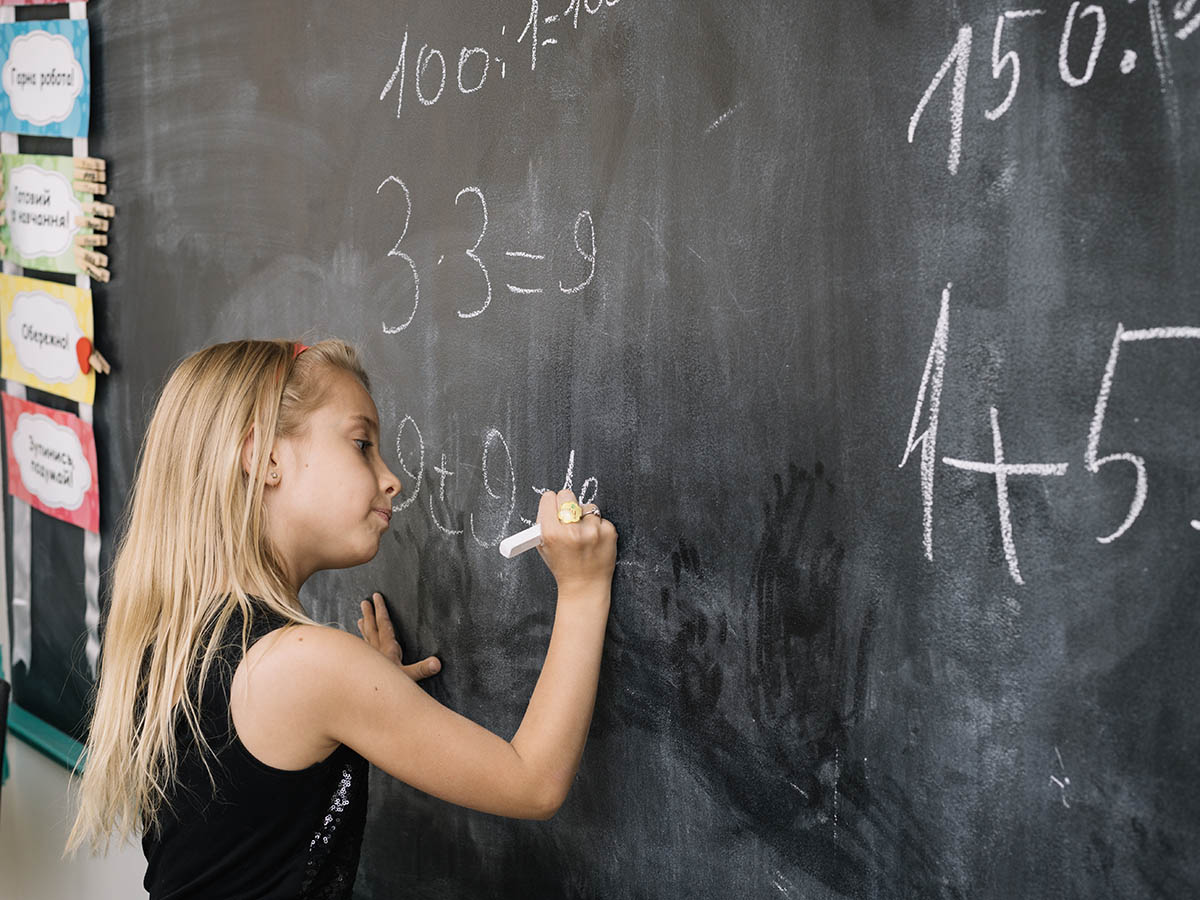
Published by COMPUCHILD
“I’m not a math person” has become such a familiar phrase that we sometimes accept it as a personality trait. Parents say it. Educators hear it. And, eventually, children start saying it about themselves. But we rarely hear someone say, “I’m not a geography person,” or “I’m just not a history person” with quite the same sense of finality.
That should make us pause. We have become increasingly thoughtful about avoiding labels and recognizing that children learn in different ways. Yet when it comes to math, we seem to give ourselves permission to believe that some people simply “have a math brain” and others do not. Have we quietly given ourselves permission to be biased toward math? And, more importantly, what happens when children begin to believe that their relationship with a subject is a fixed part of who they are?
Consider a familiar moment. A child is building a tower from blocks and carefully counts how many pieces are needed for each level. They estimate whether another block will fit. They notice that one side is taller than the other and start rearranging pieces. Nobody stops the child and says, “You seem to have a natural talent for spatial reasoning.” They are simply playing. And yet, a few years later, the same child may see a worksheet filled with numbers and decide, “I hate math.” That change matters.
Here are five ways to rethink how we talk about math.
1. Treat math as something children do, not something they either are or are not
Arthur Glenberg’s research from 1997 offers an important way to think about learning: our understanding is closely connected to perception, action, and interaction with the world. In everyday language, children often understand an idea more deeply when they can experience what that idea means rather than simply memorize a symbol or rule.
This is especially relevant to mathematics.
A preschooler dividing crackers among three friends is already exploring division. A child arranging toy cars from shortest to longest is exploring measurement and ordering. A middle school student adjusting the ingredients in a recipe is working with ratios.
The math is there before the vocabulary arrives.
For parents, this means we do not always need to create another “math lesson.” We can ask questions during ordinary life: “How many do we need?” “Which one is bigger?” “How could we make these equal?” “What do you think will happen if we double it?”
The goal is to help children experience mathematics as a way of making sense of the world.
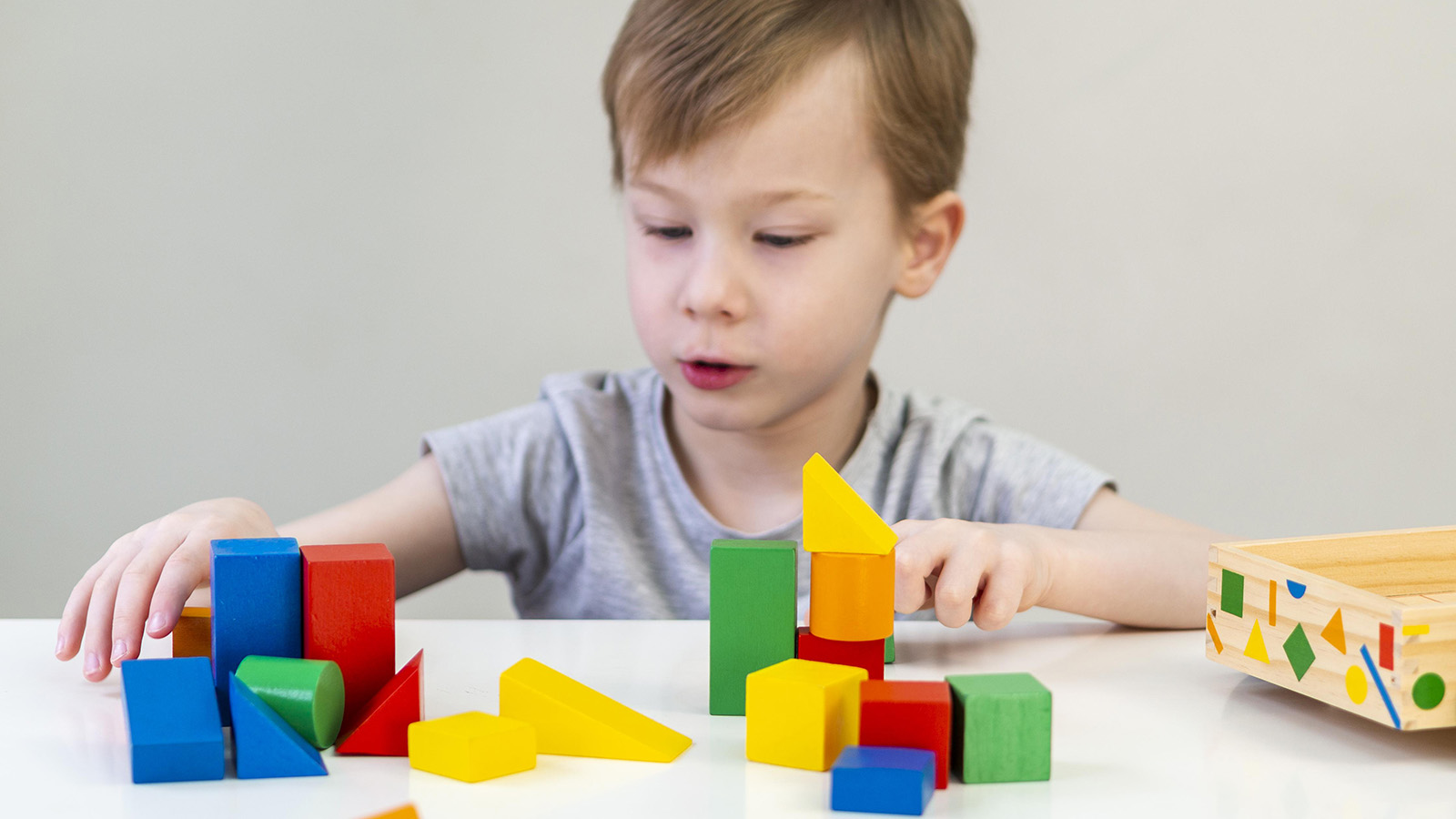
The right experiences can help children see math everywhere
2. Shift the Focus from Getting It Right to Figuring It Out
Research by Carol Dweck and colleagues has explored how children’s beliefs about whether ability can change relate to learning and achievement. In a 2007 study of seventh graders, students who viewed intelligence as more malleable showed more positive trajectories in mathematics achievement, and an intervention teaching this perspective improved motivation and changed the achievement trajectory of students in the intervention group.
That does not mean we should simply tell every child to “have a growth mindset.”
The more powerful message is embedded in how adults respond.
Imagine two children solving the same problem. One gets the answer immediately. The other takes several attempts.
If we say to the first, “You are so smart at math,” we may unintentionally make speed and correctness part of the child’s identity. If we say to the second, “You are not a math person,” we have made struggle sound like evidence of inability.
Instead, we can focus on the process: “Tell me how you figured that out.” “What did you try?” “What changed when you tried it another way?”
Children need to hear that being confused is not the opposite of being good at math. Sometimes, it is part of learning math.
3. Pay attention to the messages children hear about who is “good at math”
Elizabeth M. Gunderson and her colleagues found that parents’ beliefs and attitudes about mathematics can influence how children develop their own beliefs about math. Their research suggests that when adults communicate the idea that math ability is something you either have or you do not, children can begin to adopt that same view of themselves.
This can happen in surprisingly ordinary moments.
A parent might see a difficult homework problem and say, “I was never good at math either.” It may sound like empathy. It may even be intended to make the child feel less alone. But the child can hear something different: Maybe this is just something our family isn’t good at.
Now imagine the same moment approached differently: “That one looks tricky. Let’s see what you can figure out.”
The second response does not promise that the problem will be easy. It simply leaves the door open.
That distinction is important. Children are constantly building ideas about themselves as learners, and the casual comments adults make can become part of that story. If we want children to believe that their abilities can develop, our language needs to leave room for development too.
4. Stop treating speed as proof of mathematical ability
Jo Boaler’s work in mathematics education has drawn attention to the damage that can occur when children come to believe that being good at math means being fast at math. Her research and writing emphasize that students have different mathematical strengths and that creative, open approaches can help children develop stronger relationships with mathematics.
Think about a child who needs extra time before answering a question.
They may not be struggling because they do not understand. They may be visualizing the problem, testing possibilities, or looking for a pattern.
Imagine asking, “How many ways can you solve this?” instead of “What is the answer?”
Suddenly, the child who was anxious about being the fastest can become the child who notices something nobody else noticed.
That shift is significant. Mathematics is not only about producing an answer. It is also about reasoning, noticing, explaining, testing, revising, and making connections.
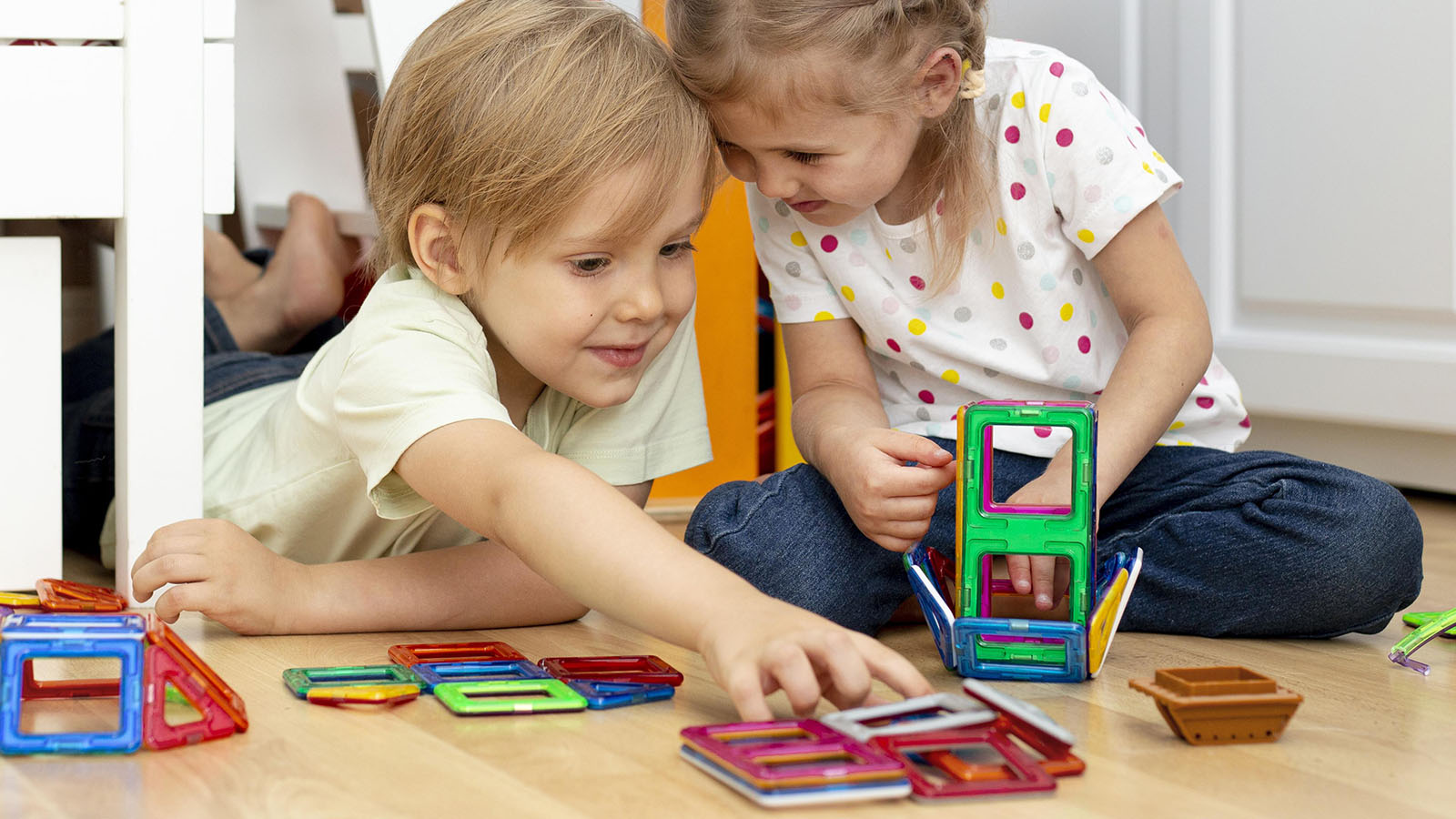
The right approach can turn math anxiety into discovery
5. Give children opportunities to see themselves as capable mathematicians
The National Research Council’s Adding It Up describes a quality called “productive disposition”: the tendency to see mathematics as meaningful and worthwhile, to believe that effort can lead to improvement, and to see oneself as capable of learning and doing mathematics. The report also notes that many children enter school eager to learn mathematics, while some begin to lose that confidence as they encounter judgments about their performance.
This gives parents and educators a powerful question to ask:
What experiences are we giving children that allow them to think, “I can figure this out”?
For one child, it might be designing a bridge from craft materials. For another, it might be figuring out how many tiles are needed to cover a surface. For an older student, it might be using data to investigate a question they genuinely care about.
The activity itself matters, but so does the identity that develops alongside it.
A child who repeatedly experiences, “I tried something, it did not work, I changed my approach, and eventually I figured it out,” is learning more than a mathematical procedure. They are learning something about themselves.
And that may be one of the most valuable lessons we can give them.
Math does not need to become every child’s favorite subject. It does need to remain a subject every child is allowed to believe they can learn.
CompuChild’s Experiences and Thoughts
As a leading children’s education franchise, COMPUCHILD’s experience working with children from pre-K through middle school has reinforced this idea time and again. We see that children often approach a challenge very differently when they are given room to experiment, build, question, collaborate, and try again. A child who may hesitate when presented with a traditional academic task can become remarkably persistent when the same underlying ideas are connected to something they can see, manipulate, design, or solve. Our belief is that after-school education should complement the classroom by giving children opportunities to discover what they can do, rather than prematurely deciding what they cannot do.
That is particularly important in an age when parents are looking for ways to excite their children about education without turning every afternoon into another classroom. The most effective enrichment does not simply add more work. It can give children a different relationship with learning.
This is also why we believe after-school enrichment programs can play an important role in children’s development. They can create space for curiosity that is difficult to protect in a busy school day. They can connect academic ideas with real problems. They can give children permission to be beginners, make mistakes, and try again.
And perhaps that is the larger lesson behind the phrase, “I’m not a math person.”
Maybe we should be just as careful about labeling a child’s relationship with mathematics as we are about labeling any other aspect of who they are.
References
Blackwell, Lisa S., Kali H. Trzesniewski, and Carol S. Dweck. “Implicit Theories of Intelligence Predict Achievement across an Adolescent Transition: A Longitudinal Study and an Intervention.” Child Development, vol. 78, no. 1, 2007, pp. 246–263.
Boaler, Jo. Mathematical Mindsets: Unleashing Students’ Potential through Creative Math, Inspiring Messages and Innovative Teaching. Jossey Bass, 2016.
Glenberg, Arthur M. “What Memory Is For.” Behavioral and Brain Sciences, vol. 20, no. 1, 1997, pp. 1–19.
Gunderson, Elizabeth A., et al. “Parent Praise to 1- to 3-Year-Olds Predicts Children’s Motivational Frameworks 5 Years Later.” Child Development, vol. 84, no. 5, 2013, pp. 1526–1541.
National Research Council. Adding It Up: Helping Children Learn Mathematics. National Academies Press, 2001.
We recently explored this idea in a short video. Watch the video here.