
Published by COMPUCHILD
A parent is driving their child from soccer practice to piano lessons. The car becomes quiet for just a few seconds, and the parent quickly hands the child a tablet or phone to keep them occupied. Another parent notices their child has “free time” after school and immediately signs them up for another activity because unstructured time feels unproductive or wasteful. In classrooms, many educators are beginning to notice a similar pattern. Children are constantly entertained and constantly receiving stimulation, yet many are finding it harder to focus deeply, stay patient, or remain curious when there is nothing actively capturing their attention.
This usually comes from a caring intention. Parents want their children to stay engaged, safe, learning, and emotionally happy. Meaningful after-school programs and enrichment activities can absolutely help children develop confidence, creativity, communication skills, and friendships. The problem begins when every quiet moment is filled before a child has the opportunity to think independently, use their imagination, wonder about something, or solve problems on their own.
A simple example shows this clearly. Imagine a seven-year-old child saying, “I’m bored,” during a rainy afternoon at home. A parent’s first instinct may be to turn on a screen, suggest an organized activity, or provide entertainment right away. But if the child is given some time instead, twenty minutes later, they may be building a blanket fort, pretending to run a store, drawing comics, or inventing stories using cardboard boxes and household objects. What first looked like boredom was actually the beginning of creativity and independent thinking.
Here are five ways boredom may quietly support healthy child development.
1. Boredom Helps Children Learn How to Think for Themselves
Psychologist Timothy Wilson and his colleagues at Harvard and the University of Virginia explored how uncomfortable many people become when left alone with their thoughts. Their findings, published in Science, showed that people often struggle to simply sit quietly and think without stimulation.
For children, this matters more than we realize. When every spare moment is filled with videos, notifications, or tightly scheduled activities, children lose opportunities to practice internal reflection. They begin depending on outside entertainment instead of developing their own ideas.
Imagine a child waiting at a restaurant without a device. At first, they fidget. Then they begin making shapes with napkins, asking questions, or inventing games. Those small moments build mental flexibility.
This is one reason many educators now encourage balanced enrichment programs for children rather than nonstop stimulation.

Mental Flexibility with Imaginative Play
2. Creativity Often Begins After the “I’m Bored” Moment
Research from psychologist Sandi Mann suggests boredom can actually encourage creative thinking. In her studies, participants who completed boring tasks later showed greater creativity during idea generation exercises.
In everyday parenting terms, boredom creates space for the brain to wander. That wandering is often where imagination grows.
A middle school student who spends an unstructured Saturday afternoon doodling, building with recycled materials, or experimenting with music may appear unproductive at first glance. But these moments can spark original thinking in ways that highly structured schedules sometimes cannot.
This is especially important in today’s rapidly changing world, where innovation and adaptability matter just as much as memorization. Strong enrichment programs for kids increasingly recognize that creativity and exploration are essential parts of learning, not distractions from it.
3. Constant Entertainment Can Lower Frustration Tolerance
Children who are always redirected away from boredom may struggle when learning becomes difficult or slow. They become used to instant stimulation and immediate rewards.
Teachers often notice this during independent reading, writing, or problem-solving tasks. A child may quickly say, “This is boring,” when the real issue is discomfort with mental effort.
A child assembling a difficult puzzle may initially feel frustrated enough to quit. But if given time instead of immediate rescue, they often experience the satisfaction of persistence. That emotional resilience matters far beyond childhood.
The goal is not to remove enjoyable activities. It is to help children learn that not every meaningful experience is instantly exciting.
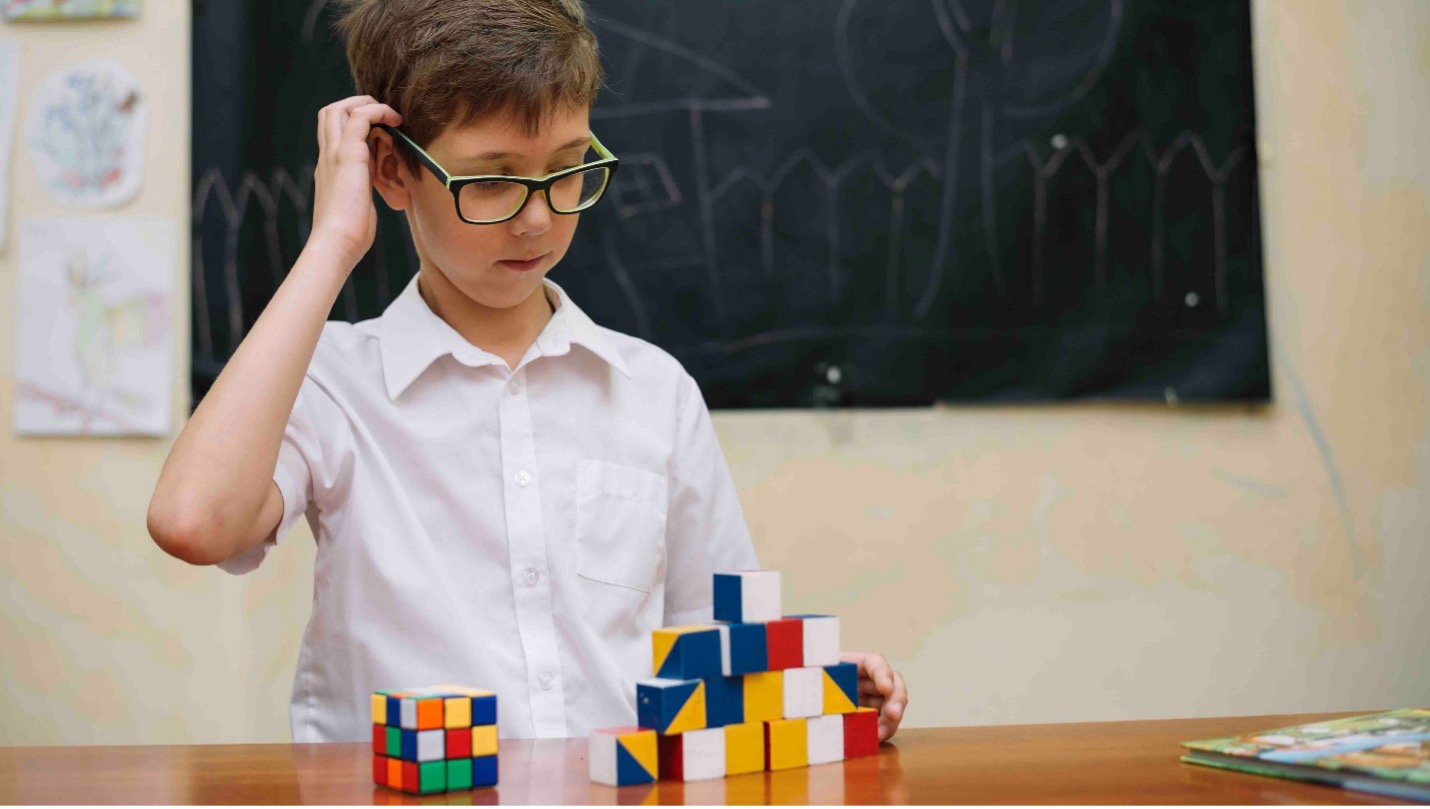
The Satisfaction of Persistence
4. Unstructured Time Strengthens Initiative
Some of the strongest learning moments happen when adults step back slightly.
A child with an hour of free time might organize a pretend classroom, build a backyard obstacle course, or invent rules for a new game with siblings. These experiences develop leadership, planning, communication, and independence.
Ironically, children who always follow adult-directed schedules sometimes struggle to initiate activities on their own.
This is why many thoughtful STEM and STEAM programs for kids intentionally include open-ended projects where children can experiment, fail safely, and explore ideas independently rather than simply follow instructions.
5. Boredom Can Reignite Interest in Learning
Parents frequently search online for answers to questions like “why kids lose interest in learning.” Often, the issue is not a lack of ability. It is overstimulation.
When children constantly consume entertainment, learning can begin to feel passive. They wait to be entertained instead of actively engaging with ideas.
A child who spends time outdoors with minimal structure may suddenly become fascinated by insects, weather patterns, or how bicycles work. Curiosity often returns when the brain has room to notice the world again.
This is where hands-on enrichment programs can make a lasting difference. The best learning experiences do not overload children with information. They invite children to ask questions, experiment, and discover.
Children do not need every moment optimized to grow successfully. In fact, some of the most important developmental skills emerge during quiet, ordinary moments that adults are tempted to eliminate.
Boredom is not always a problem to solve. Sometimes it is the doorway to creativity, resilience, self-direction, and deeper curiosity.
As parents and educators, the goal is not to remove enriching opportunities or structured learning. Children benefit tremendously from supportive environments, strong mentorship, and engaging experiences. But healthy development also requires space to reflect, imagine, struggle a little, and create something unexpected from nothing at all.
In a world filled with constant stimulation, giving children room to think may become one of the most valuable gifts we offer them. Thoughtfully designed hands-on learning experiences, creative exploration, and experiential education can support that balance beautifully by helping children stay engaged without losing their natural curiosity.
References
Mann, Sandi, and Rebekah Cadman. “Does Being Bored Make Us More Creative?” Creativity Research Journal, vol. 26, no. 2, 2014, pp. 165–173.
Wilson, Timothy D., et al. “Just Think: The Challenges of the Disengaged Mind.” Science, vol. 345, no. 6192, 2014, pp. 75–77.
We recently explored this idea in a short video about how boredom can actually build creativity in children. Watch the video here.